
Engineering translated into controlled execution.
Procurement, engineered supply, international logistics, construction, installation and commissioning, managed as one connected delivery system rather than a series of separate contracts.
EXECUTION PHILOSOPHY
One site. Many packages. One coordinated execution system.
Industrial execution is not a sequence of isolated contracts. It is the controlled synchronisation of design release, procurement, fabrication, logistics, civil works, structures, utilities, process installation and start-up.
Thulium can operate under EPC, EPCM or hybrid delivery structures according to design maturity, Owner capability, risk allocation and commercial strategy.
INTEGRATED EXECUTION CHAIN
From release to handover.
The construction phase is managed as a connected flow, not as independent supplier schedules.
Freeze interfaces and approved technical basis.
Package, tender, compare and place orders.
Shop drawings, QA, inspections and FAT.
Pack, ship, clear, transport and track.
Civil, steel, envelope and MEP workfronts.
Platforms, equipment, utilities and tie-ins.
FAT/SAT, systems, interfaces and performance.
As-built, O&M, training and acceptance.
DELIVERY MODEL
The execution structure should fit the project — not the other way around.
The right model depends on how mature the design is, how much risk the Owner wants to transfer, where cost visibility matters, and how much local construction capability already exists.
EPC / Turnkey
A single contractor takes responsibility for the defined engineering, procurement, construction and commissioning scope.
Price certainty
High
Owner Involvement
Low
Risk transfer
High
Best when scope and design are sufficiently mature.
EPCM / Management & Supervision
The Owner contracts packages directly while one engineering and supervision function controls interfaces, planning, quality and progress.
Cost visibility
High
Flexibility
High
Owner Involvement
High
Best where local capability and progressive tendering matter.
Hybrid Execution
Engineered imported packages are secured at firm price while local works remain directly contracted and centrally coordinated.
Cost control
Equilibré
Local content
Elevé
Coordination effort
Elevé
Best when import risk and local execution must be balanced.
CORE EXECUTION CAPABILITIES
Eight functions. One delivery framework.
Each function is controlled against the same baseline: scope, schedule, interfaces, QHSE, cost and readiness.
Execution Strategy
Delivery model, WBS, contracting packages, governance, phasing, responsibilities and site organisation.
STRUCTURE THE BUILD
Procurement & Expediting
RFQs, vendor evaluation, clarifications, orders, shop-drawing release, expediting, inspection and FAT.
PROTECT THE CRITICAL PATH
Engineered Supply
Made-to-specification steel, platforms, tanks, silos, MEP packages and specialist equipment through controlled fabrication.
BUILD TO SPECIFICATION
International Logistics
Packing, labelling, shipment, customs documentation, inland transport, laydown and critical-item tracking.
FACTORY TO WORKFRONT
Construction & Installation
Mobilisation, civil, steel, envelope, MEP, equipment erection, utilities, workfront release and punch management.
COORDINATE THE SITE
QHSE & Quality
Zero-harm framework, permits, ITPs, hold points, NCRs, traceability, lifting plans and site inspections.
CONTROL SAFETY & QUALITY
Planning & Cost Control
Integrated baseline, look-ahead planning, measured progress, commitments, forecast, change and payment control.
Commissioning & Handover
FAT, pre-commissioning, SAT, system testing, performance proving, training and final documentation.
PROVE THE PLANT
PROCUREMENT & EXPEDITING
Long-lead packages are managed backwards from the erection date.
Procurement is synchronised with engineering approvals and the construction critical path. Every major package receives a required-on-site date and a latest safe order date.
- Package strategy & battery limits
- Technical / commercial evaluation
- Expediting & milestone tracking
- Shipping release dossier
- Vendor prequalification
- Shop-drawing control
- Inspection / FAT coordination
- Delivery readiness check
Scope / specification
Market / capability
Clarifications
Terms / lead time
Release
Approval cycle
Hold / witness
Ready to dispatch
INTERNATIONAL LOGISTICS
The supply chain ends at the installation workfront — not at the port.
One continuous logistics view from fabrication origin to site readiness. Contractual boundaries for freight, port handling, customs, inland transport and offloading are defined package by package.
Preservation
packing
Documents
Tracking
Handling
Customs
Route
Delivery
Offload
Preserve
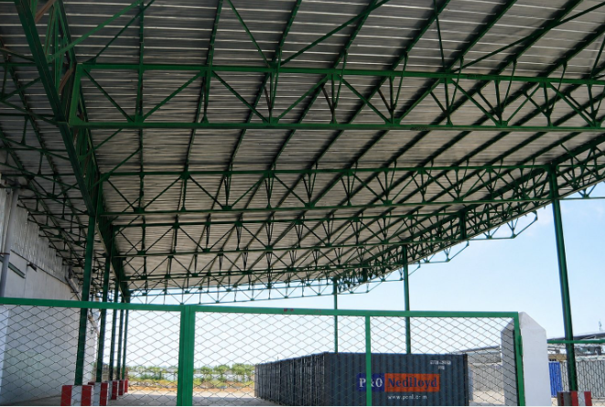
CONSTRUCTION & INSTALLATION
Workfronts are released in the order the plant needs them.
Site offices, temporary utilities, access, setting-out, laydown and HSE controls.
Earthworks, platforms, foundations, anchor bolts, slabs and underground networks.
PEB erection, process platforms, roofing, cladding and weather-tightness release.
Electrical, HVAC, fire systems, utility distribution and technical rooms.
Heavy equipment, tanks, conveyors, piping, cabling, tie-ins and OEM support.
Inspections, punch lists, workfront release certificates and readiness for commissioning.
COMMISSIONING & HANDOVER
Completion means a plant that works — and a file that proves it.
Commissioning starts before equipment arrives. Test plans, system boundaries, interface responsibilities and acceptance criteria are prepared early enough to make start-up a controlled phase rather than a final improvisation.
FAT
Factory tests on major equipment and skids
Pre-commissioning
Cleaning, pressure tests, continuity and checks.
SAT
Site acceptance and installed-equipment verification.
Systems
Energisation, balancing, loop and cause/effect tests.
Integrated tests
Utilities, building systems and process interfaces.
Performance
Operational proving and acceptance criteria.
Handover
Training, files, spares and final acceptance.
